Kitchen Vastu Tips for Health and Prosperity
 2026-05-04
  Team Jindal Panther
A kitchen is not just a place where meals come together. It’s where routines begin early in the morning, where chai boils before the day starts, and where small habits quietly shape health over time. That’s exactly why kitchen vastu has always been taken seriously in Indian homes.
Not because of blind belief, but because it often aligns with common sense, light, airflow, heat placement, and overall balance.
A well-planned kitchen feels easy to use. There’s less clutter, better movement, and somehow even cooking feels lighter. On the other hand, poorly planned kitchens, wrong placement, cramped layouts, no ventilation, tend to feel chaotic. And that chaos slowly shows up in everyday life.
So instead of treating vastu as a rigid rulebook, it helps to see it as a set of practical guidelines that make the kitchen healthier, smoother, and more comfortable to work in. For a complete understanding of Vastu principles for your entire home, see our complete guide to Vastu for home construction and design
Importance of Kitchen Placement in Vastu
The placement of a kitchen plays a bigger role than most people realise.
Think of it like placing a stove in the wrong corner, everything else starts adjusting around it, often awkwardly.
In kitchen vastu, the idea is to position the kitchen in a way that balances heat (fire), air, and movement.
A poorly placed kitchen, right in the centre of the house, can disrupt this balance. It may lead to issues like poor ventilation, trapped heat, or even practical problems like smoke spreading into living areas.
On the other hand, when the kitchen is placed thoughtfully:
- Cooking becomes more comfortable
- Natural light flows in better
- Smoke and heat have an exit
- Movement inside the kitchen feels smoother
In many Indian homes, especially independent houses, the kitchen is often placed based on available space rather than planning. That’s where problems start, cramped corners, blocked windows, or awkward layouts.
A little thought at the planning stage can avoid years of inconvenience.
Best Direction for Kitchen According to Vastu
Direction is one of the most talked-about aspects of kitchen vastu.
And honestly, it’s not as complicated as it sounds.
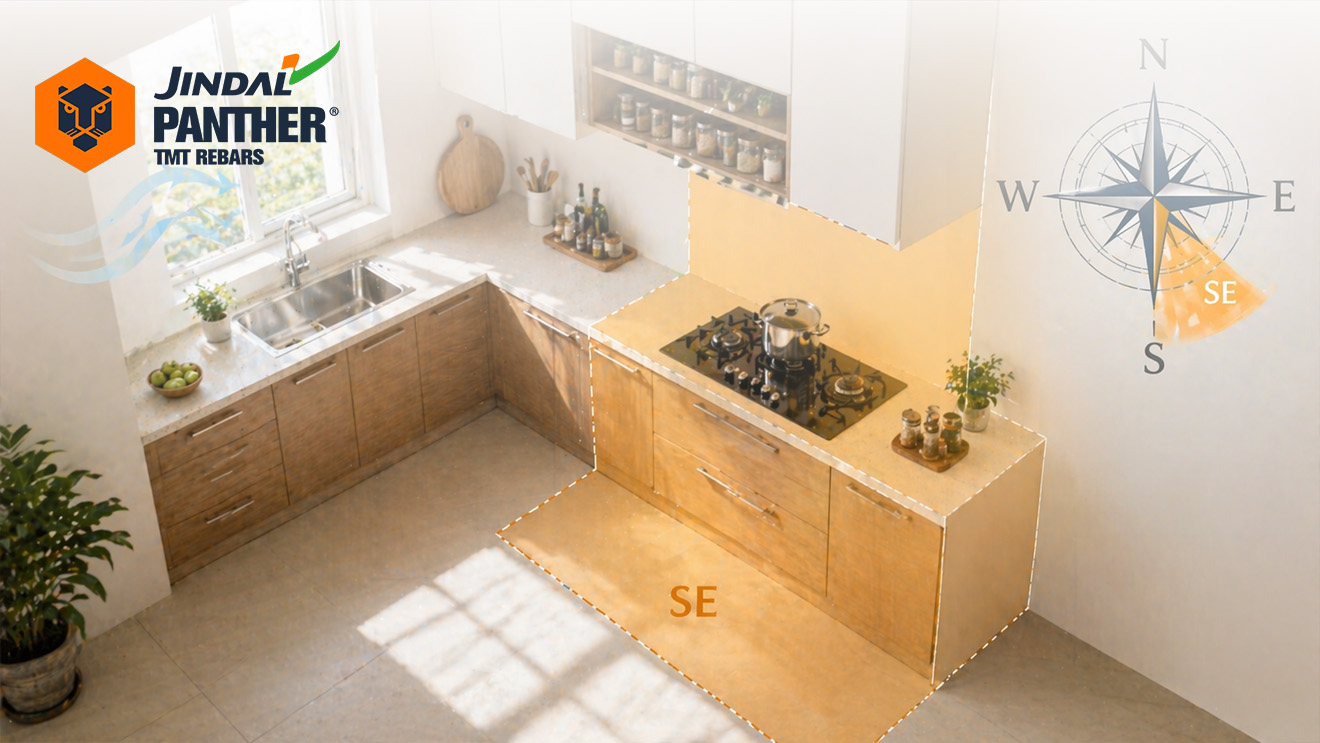
South-East Kitchen Placement
The south-east direction is considered ideal for kitchens.
Why? Because it aligns with the element of fire.
In practical terms, this simply means:
- The kitchen receives good sunlight during the day
- The heat generated from cooking doesn’t feel trapped
- The space stays relatively dry, which matters a lot during monsoons
Homes with kitchens in this direction often feel naturally ventilated and brighter.
Even in modern apartments, this direction tends to work well if supported with proper windows and exhaust systems. If your home has a west-facing kitchen, our guide to west facing house Vastu offers additional tips for balance.
Alternative Kitchen Directions
Not every home can follow the “ideal” direction.
That’s the reality, especially in city apartments.
In such cases, the north-west direction is usually considered the next best option.
It still allows decent airflow and avoids heat buildup.
If the kitchen falls in another direction entirely, adjustments can still be made:
- Improve ventilation with chimneys or exhaust fans
- Use lighter colours to reduce heat absorption
- Keep the layout clutter-free to improve movement
The idea is not perfect.
It’s about making the space work better with what’s available.
Vastu Tips for Kitchen Layout
Once the placement is sorted, the layout becomes the next big thing.
A kitchen might be in the right direction but still feel difficult to use if the internal arrangement is off.
That’s where small kitchen vastu tips can make a noticeable difference.
Stove Direction
The stove is the heart of the kitchen.
According to vastu, it should ideally be placed in a way that the person cooking faces east.
From a practical standpoint:
- Cooking in natural light reduces eye strain
- Heat and smoke move away more easily
- The workspace feels more open
Sink Placement
Water and fire don’t go well together, both in vastu and in real life.
That’s why the sink should not be placed right next to the stove.
It avoids:
- Water splashing onto the stove
- Slippery surfaces
- Clutter in the main cooking area
Storage and Cabinets
Storage is where most kitchens either shine or struggle.
Some practical tips:
- Keep everyday items within easy reach
- Avoid overloading overhead cabinets
- Use corners smartly with pull-out units
A well-organised kitchen doesn’t just look good, it saves time every single day.
Kitchen Design Mistakes to Avoid
Here are a few that quietly create long-term problems:
- No proper ventilation
- Stove placed in a tight corner
- Sink and stove too close
- Overcrowded countertops
- Ignoring natural light
- Poor material choices
- No clear work triangle
A Small Reflection
Most people don’t notice a well-designed kitchen immediately. But they definitely notice when something feels off.
A kitchen that follows simple kitchen vastu principles often feels easier to work in—not because of belief, but because it quietly supports daily routines.
And over time, that ease adds up.
A kitchen doesn’t need to be perfect. It just needs to work well for everyday life.
And when small things; placement, direction, layout, start falling into place, the difference shows up quietly, one meal at a time.
FAQs on Kitchen Vastu
Q. Is kitchen vastu really important in modern homes?
Ans. It helps create a more practical and comfortable space. Even basic vastu principles improve ventilation, light, and layout.
Q. What if the kitchen direction is not ideal?
Ans. Adjustments like better ventilation, layout changes, and smart placement of appliances can balance things out.
Q. Can the stove and sink be next to each other?
Ans. It’s better to keep some distance between them to avoid clutter and improve functionality.
Q. Which colour is best for kitchens as per vastu?
Ans. Light shades like beige, off-white, or soft yellows work well.
Q. Is it okay to have a kitchen in the centre of the house?
Ans. It’s generally avoided because it can trap heat and disrupt airflow.
Q. How important is ventilation in kitchen vastu?
Ans. Very important. Good airflow keeps the kitchen comfortable and reduces heat buildup.
Q. Does vastu apply to small apartment kitchens too?
Ans. Yes, even small changes like layout tweaks and proper lighting can make a difference.


